Explore the first practical trust issuance opportunities for your bank
Focus areas include: bank-issued identity strategy, authority credentials, account and payment trust concepts and practical roadmap options.

Shape trusted digital assets across identity, authority, account, and payment workflows — and build a stronger long-term position for your bank.
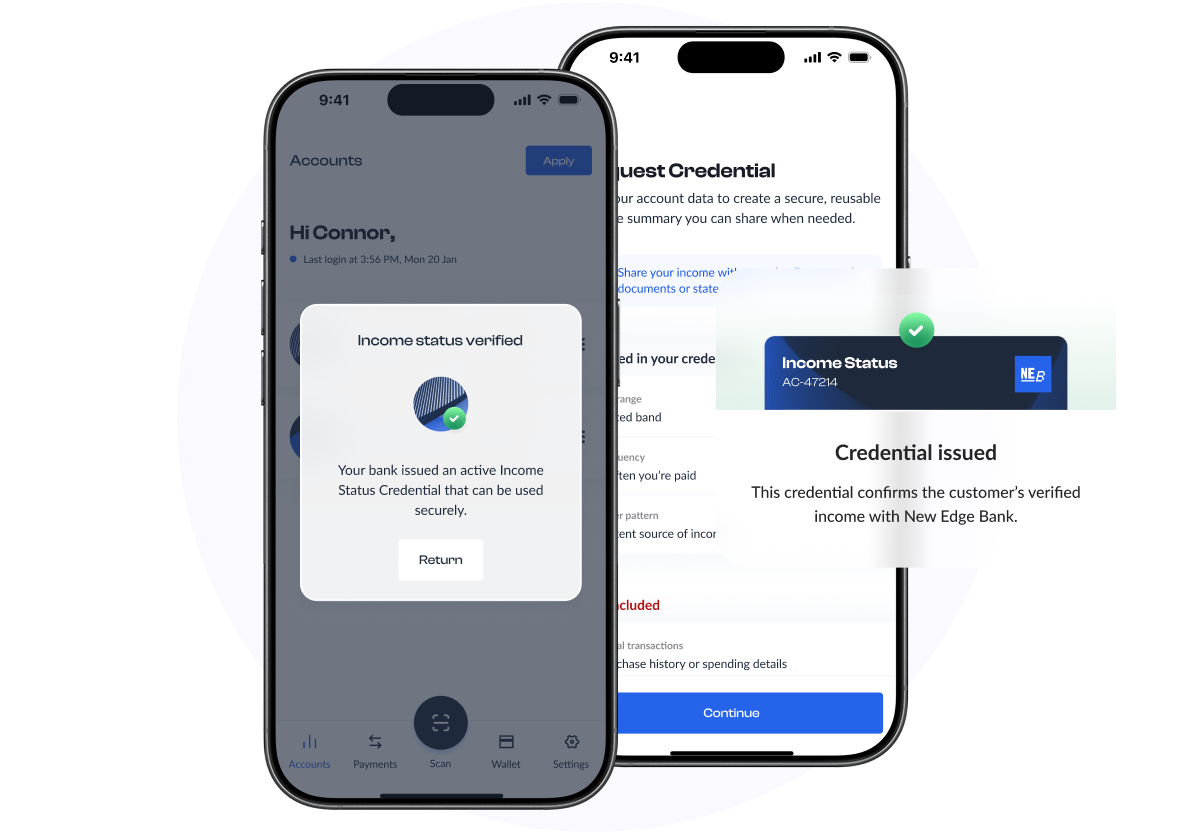
Banks already create high-value trust — but most of it is used once and left behind.
Customer identity, account ownership, and authority are established and maintained — yet in many cases, that trust is not designed to carry forward across workflows.
At the same time, stronger models of digital trust are emerging across industries, creating a clear opportunity to make existing trust more durable and more useful.
In many institutions, trusted relationships are still reconstructed across workflows:
Authority is revalidates through manual processes
Permissions are reinterpreted across systems
Account and identity trust are reused inconsistently
Valuable trust remains locked inside the workflow that created it
This increases operational effort, fragments control, and makes high-value interactions harder to govern consistently.
Banks already hold some of the most trusted relationships in the economy.
That creates an opportunity to turn existing trust into governed, reusable assets across:
→ Customer identity
→ Account ownership
→ Organizational relationships
→ Authority and signatory rights
→ Payment-related trust
This is where issuance-first strategies create value.
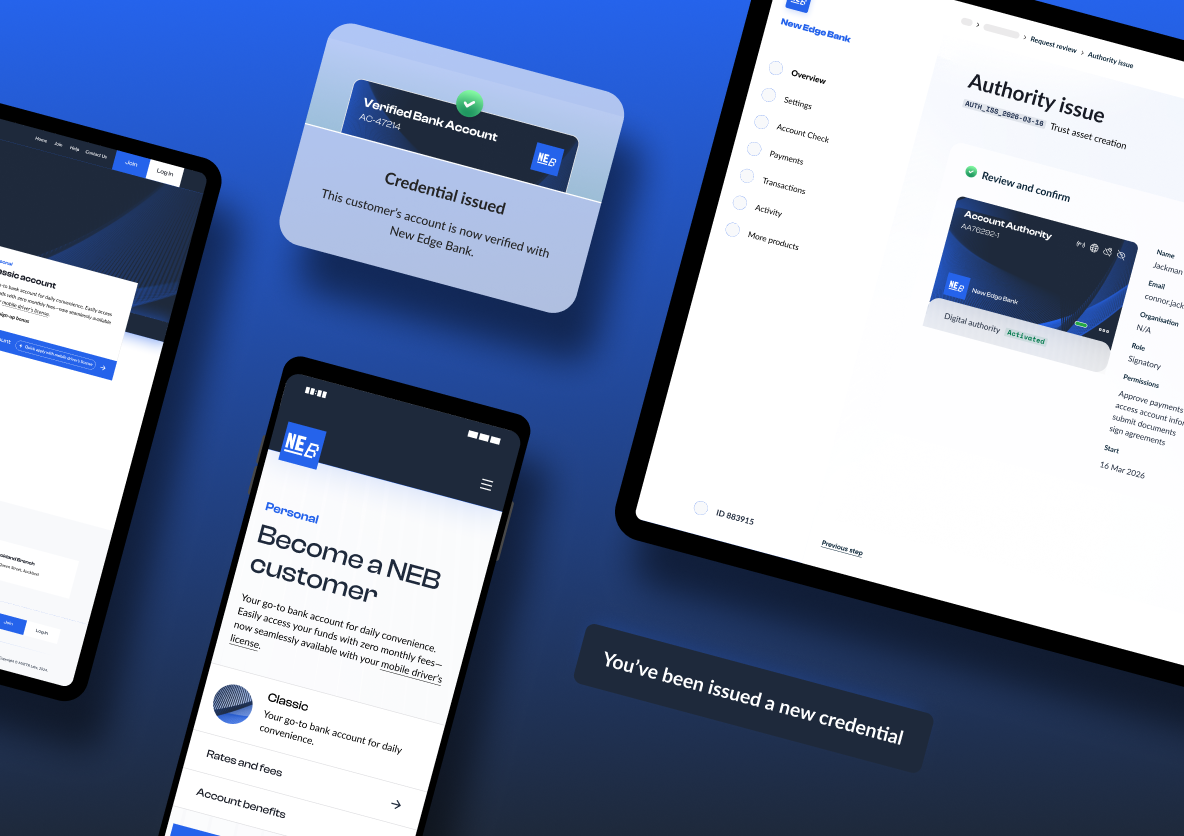
A good issuance-first strategy starts by identifying one trust relationship the bank already owns.
Identify one trust relationship the bank already creates
Decide where that trust is hard to operationalize today
Define a governed digital asset or credential concept
Validate where it improves control, efficiency, or customer experience
Expand once the value is proven
Focus areas include: bank-issued identity strategy, authority credentials, account and payment trust concepts and practical roadmap options.
